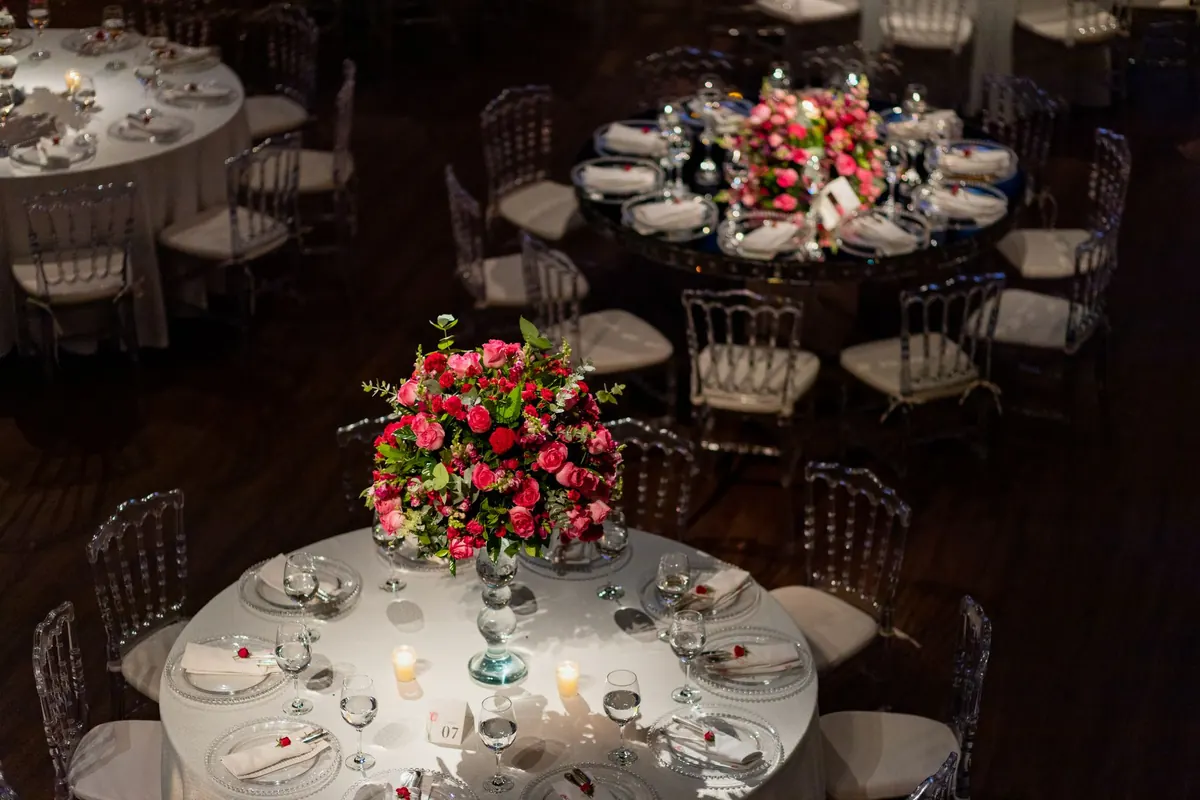
You found the room. Fairy lights, a decent car park, a bar in the corner, a price that fits. You paid the deposit on the spot, told forty people the date, and only afterwards discovered the music has to be off by ten, the room seats sixty and not a soul more, and the deposit disappears if you move the party by a week.
That sequence isn't bad luck. It's a booking made on a photograph and a quick chat. Bury has plenty of good function spaces — church halls, cricket clubhouses, pub back rooms, hotel suites, community centres from Ramsbottom to Radcliffe — and nearly every problem traces back to a handful of questions nobody asked early enough. Ask them before money changes hands and the evening takes care of itself.
A deposit can mean three quite different things, and venues are rarely in a rush to explain which one applies to you.
It might be the first instalment of the hire fee. It might be a separate damage bond, returned after someone has walked round the room with a clipboard. Or it might be a non-refundable booking fee that buys you nothing except the date. Those are not the same arrangement, and the difference only matters when something goes wrong.
So ask: how much, due when, refundable or not, and what exactly it's set against. If it's a bond, ask what counts as damage, who decides, and how long the return takes. Find out when the balance falls due — some venues want it a fortnight ahead, others on the night — and whether the quoted price includes VAT. Then get the answer by email rather than accepting a scribbled note on the back of a receipt.
Pay in a way that leaves a trail: card or bank transfer. If a venue will only take cash and won't confirm anything in writing, that tells you something useful about how the rest of the arrangement is likely to go.
The figure that matters is the one attached to the venue's licence and fire risk assessment, not the number of chairs currently stacked in the corner.
Seated and standing limits are usually different, and the gap is wider than people expect. A dance floor, a buffet table, a DJ booth, a photo corner and a table for cards and presents all eat into the space. Ask for the licensed capacity in writing, and ask what it assumes — rows of chairs, or people standing with drinks. If you're planning speeches and a disco in the same room, the seated number is the one to plan around.
Ask what happens if you go over. Most venues will turn people away at the door, which is a miserable conversation to have with an aunt at nine o'clock. Also worth checking: how many toilets there are, whether there's a separate entrance, and whether children count towards the limit.
Almost every venue near housing has a time by which amplified music has to stop, and it's usually earlier than the time you have to leave.
There's the time the music goes off, the time the bar closes, the time the building must be empty, and the time your helpers can get back in the following morning to clear up. Add an hour for taking down decorations, and don't assume the venue will store your cake stand until Tuesday.
Ask whether the venue runs its own sound system or a noise limiter, and who controls it. Ask whether a live band is permitted at all — licence conditions sometimes restrict live and recorded music differently. A venue that seems fussy about volume isn't being awkward; one complaint from a neighbour can put its licence at risk, and that's a serious matter for a business.
If you want a later finish, don't promise guests anything yet. Ask the venue whether its licence covers it or whether something like a temporary event notice would be needed. For anything involving licensing, check with Bury Council's licensing team rather than relying on a rumour from a friend.
Cancellation clauses are written to protect the venue, which is reasonable enough, but they're worth reading line by line before you sign.
Look for the sliding scale: full refund if you cancel months out, part refund nearer the date, nothing inside a few weeks. Find out whether the booking can be moved to another date instead of cancelled, and whether that costs anything. Ask what happens if the venue itself has to close, and whether your money comes back. Check whether there's a minimum number of guests you're committed to paying for, regardless of how many turn up.
If the sums involved are significant or you're signing a contract, it's sensible to take proper advice before you put your name to it.
The hire fee is rarely the whole cost. Ask for the quote in writing and go through it item by item.
Two lines cause most arguments: corkage and the bar. If you want to bring your own drinks, ask early and get the answer in writing.
Ask who is actually running the room that night. A named duty manager and a phone number for the day itself will save you an hour of guessing. Confirm how early you can get in to set up, when you must be out, where you can park while unloading, and where the bins go.
Check insurance too. The venue's cover may not extend to your event, and anyone you bring in — a caterer, a bouncy castle, a face painter — will normally need their own public liability cover. If any guest uses a wheelchair, ask about step-free access and accessible toilets before you book, not after.
None of this takes long, and a single confirmation email listing what you've agreed is worth more than anyone's memory of a phone call. If something changes later, get the change in writing as well. Do that, and the only surprises left on the night should be the good kind.
Photo: Matheus Bertelli / Pexels
Bury's town centre has plenty of coffee but too little variety. Real recovery needs independents, an evening economy...
Everything Bury voters need before polling day: registration deadlines, photo ID rules, postal and proxy votes, and...

A practical comparison of Bury's leisure centres, covering membership models, pool and class timetables, and when...

Local news and community stories from Bury.